

Posts by Ellen Woudstra
Economic Outlook of the Metropolitan Region Amsterdam 2026: The region remains strong, but growth requires a different approach
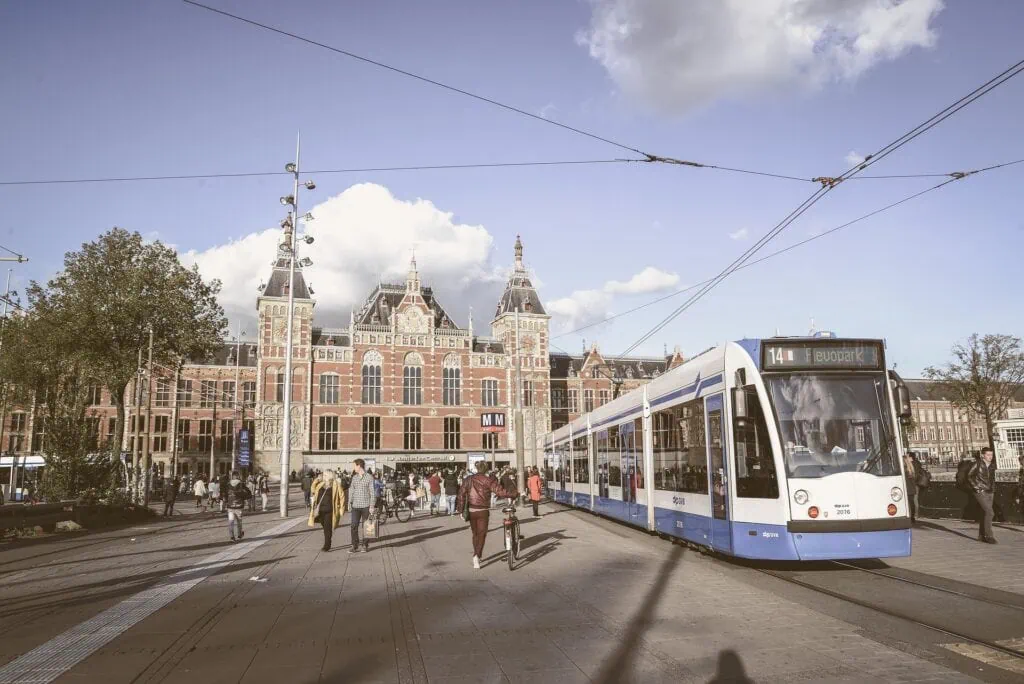
What is the state of the economy in the Metropolitan Region Amsterdam (MRA), and what is needed to keep the region economically strong in the future? These were the central questions discussed on 8 September during the presentation of the Economic Outlook of the Metropolitan Region Amsterdam 2026 at De Balie in Amsterdam. Researchers Henri…
Read MoreNew textbook on ‘Spatial Economics’ by Hans Koster, Stef Proost and Jacques-François Thisse
Land, by its very nature, is immobile and unproduced, creating competition for prime locations that drives disparities in economic outcomes. Transportation, meanwhile, serves as the mechanism for overcoming spatial frictions but imposes costs that influence where firms and individuals choose to locate. Together, these factors explain the emergence and persistence of cities, regional disparities, and…
Read MoreMathieu Steijn awarded NWO Veni Grant for research how community spaces promote equal opportunities for children

Mathieu Steijn has been awarded a prestigious Veni research grant by the Dutch Research Council (NWO). With this grant, he will investigate how community spaces – such as sports clubs, community centres and libraries – can help improve opportunities for children growing up in disadvantaged families. Inequality of opportunity is increasing in the Netherlands. Whether…
Read MoreWithout action now, we will soon not have enough drinking water

Without intervention, the Netherlands risks a shortage of clean and affordable drinking water in the future. This is what the Raad voor de leefomgeving en infrastructuur (Rli) warns in a new advisory document, “Care for Water: the future of our drinking water as a joint task. The advice was presented to Minister Vincent Karremans of…
Read MoreReport: Social mobility over time in the district Amsterdam Nieuw-West
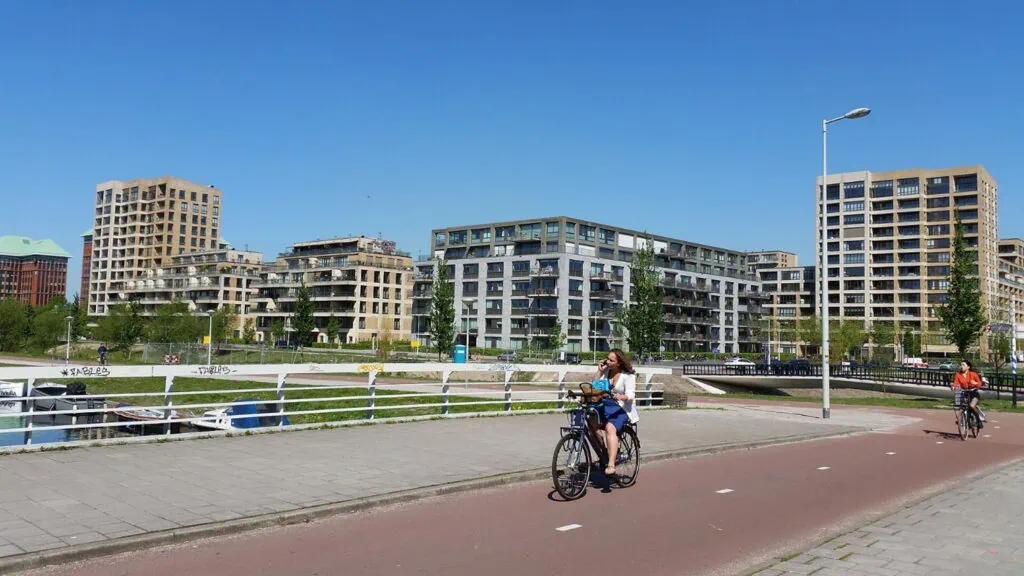
Social mobility in Amsterdam Nieuw-West continues to lag structurally behind other parts of Amsterdam, and people who experience upward mobility from Nieuw-West are increasingly less likely to remain living in their own district as adults. These are some of the key findings in the latest report prepared for the Kenniscentrum Ongelijkheid (Knowledge Centre for Inequality)…
Read MoreMaking homes more sustainable leads to better health for childre

Better insulation and ventilation in social housing means that children need less medication for asthma or allergies. This is the conclusion of a large-scale study involving two million people, monitored for 10 years by researchers from TU/e and Vrije Universiteit Amsterdam (VU). It is the first study to show on a large scale that making…
Read MoreShould we densify or relocate cities?

As part of his PhD on the spatial distributional effects of the climate transition, Yashvant Premchand, together with Peter Mulder, mapped out the costs and benefits of housing construction in climate-risked areas. Their research shows that this debate requires more nuance than is often assumed. It is not simply a choice between building in “safe”…
Read MoreNew research: Which house price data are suitable for housing market research?

Which house price data can researchers use? Ideally, one would use sales prices: the prices at which houses were actually sold. In practice, however, this data isn’t always available, or it only becomes available with a delay. Therefore, list prices or assessed values (such as the official tax assessments like WOZ values in the Netherlands)…
Read MoreHigh-speed rail and the spatial economy

High-speed rail (HSR) is expanding rapidly and is often promoted as a fast and sustainable mode of transport. A recently published article by Hans Koster and Jacques Thisse reviews a large body of theory and empirical evidence and shows that, while HSR can deliver substantial aggregate benefits, it also reshapes residential and employment patterns. These spatial reallocations…
Read MoreEspecially industrial regions in Europe are vulnerable to U.S. tariffs
The high walls of import tariffs introduced by the United States over the past six months have had negative consequences for economic activity. Which European and Dutch regions face the greatest risks? This question is addressed by Dimosthenis Sampson (University of Groningen), Bart Los (University of Groningen), Spatial Economics’ Mark Thissen, and Xianjia Ye (University…
Read More